OEM/ODM support for hotel tea bags, private-label tea bags and botanical infusion concepts.
BOTANICAL INFUSION OEM · GUANGZHOU, CHINAOne factory brief.
One factory brief.
Two market-entry paths.
We develop hotel tea bags and private-label botanical infusions around the destination market—not by translating a domestic catalogue. Product concept, ingredient screening, label review, testing and inquiry fields are separated for the UAE/Gulf and the United States.
A closer look at tea-bag packing and the production environment
These photographs show day-to-day production and packing scenes at the factory.
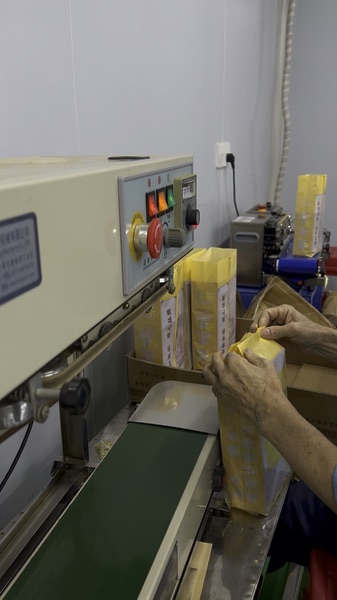

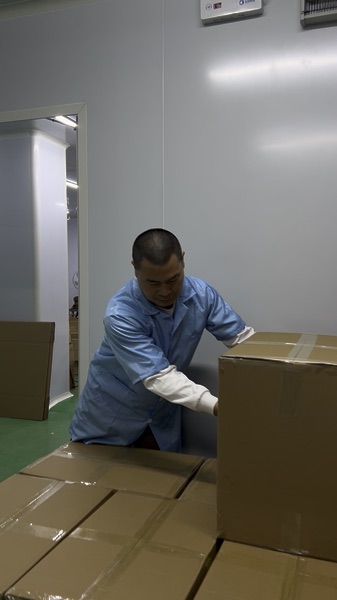
Built for buyers who need an auditable path from brief to shipment
Filter-paper, nonwoven and pyramid formats can be evaluated against formula, target cost and local packaging rules.
Formula sampling, packaging coordination, production, in-process checks, finished-product release and shipping-document alignment.
Customer-supplied compliant materials can support lower pilot quantities; printed custom packaging increases MOQ and lead time.
Production entity: Guangzhou Mingshengtang Biotechnology Co., Ltd., Guangzhou, China.
Scope, food-production licence category, current production schedule, export filing, FDA facility-registration status and buyer-required certifications must be checked against valid documents before an order is accepted. FDA registration is not FDA product approval or certification.
Tea-bag, packaging and quality options drawn from the factory brief
Tea-bag formats
Flat filter-paper bags, nonwoven bags, pyramid bags and double-chamber bags can be evaluated against the product, target cost and destination-market file.
Filter-material choices
Filter paper, conventional nonwoven, corn-fibre nonwoven, nylon mesh and PLA corn-fibre mesh/nonwoven are discussed at the specification stage; supplier compliance documents must be checked before approval.
Secondary packaging
Individual moisture-barrier envelopes or multi-bag pouches can be paired with card cartons, gift boxes and shipping cases. Artwork is not released to print until both sides confirm it in writing.
Quality & delivery
Incoming materials, in-process product and finished goods are checked against the confirmed order file. Factory release records are provided; third-party testing is arranged when the contract or destination requires it.
These are capability and commercial-planning references, not a claim that every material or SKU is automatically accepted in every country. The exact ingredient, plant part, food-contact material and licence scope are checked for each project.
A six-stage project workflow with written approval gates
Buyer brief
Confirm destination, use scenario, target customer, taste, budget, fill weight, quantity and requested delivery.
Formula & sampling
Develop from the buyer's brief or reference sample. Sampling starts from CNY 300 for the agreed 1–2 samples; additional items are referenced at CNY 100 each.
Packaging approval
Confirm inner bag, filter material, envelope, box, print content, labels and artwork. The buyer and factory approve the final file before printing.
Contract & production
Production is scheduled after the written specification, contract, deposit and required materials are confirmed.
Inspection & release
Check materials before production, key points during production and finished goods before release. Third-party testing is separately agreed when needed.
Balance & shipment
Confirm final quantity, weight and reconciliation sheet; settle the balance, then agree the freight method and shipment documents.
Choose the destination before choosing the formula
UAE / GULFHotel & foodservice pathway
Arabic/English artwork, local importer, product registration and country-by-country Gulf review.
Open Gulf entry →UNITED STATESPrivate-label conventional food pathwayFSVP importer, facility registration, prior notice, ingredient status and U.S. label review.
Open U.S. entry →Move from browsing to a reviewable project brief
Printable RFQ checklist
Destination, use scenario, formula, fill weight, filter material, packaging, quantity, tests, trade term and importer status in one brief.
Open RFQ checklist →Arabic Gulf entry
An Arabic-language decision page for hotel and foodservice buyers, with clear importer, label and halal verification boundaries.
فتح النسخة العربية ←Buyer verification centre
See what is publicly verified, what remains document-controlled and what must be checked for each destination and order.
Open verification centre →Eight export-oriented base concepts
These are development briefs, not ready-made compliance approvals. The buyer and local regulatory reviewer must confirm every botanical, plant part, flavour, claim and label before commercial production.
| Code / concept | Botanical declaration draft | Target fill | Pack / brew | Compliance watchpoint |
|---|---|---|---|---|
| INT-01Pure Peppermint | Mentha × piperita L., leaf | 1.5–2.0 g | String & tag filter bag + individual envelope200 ml, 95°C, 4–5 min | Confirm botanical identity and market-specific ingredient status. |
| INT-02Chamomile Blossom | Matricaria chamomilla L., flower | 1.5–2.0 g | String & tag filter bag + individual envelope200 ml, 95°C, 4–5 min | Control foreign matter; assess allergen/cross-contact statements with the buyer. |
| INT-03Ginger Lemongrass | Zingiber officinale Roscoe, rhizome; Cymbopogon citratus, leaf/stalk | 2.0–2.5 g | Pyramid or flat filter bag + individual envelope200 ml, 95–100°C, 5 min | Set particle size after infusion and filling trials; verify each plant part. |
| INT-04Hibiscus Rosehip | Hibiscus sabdariffa L., calyx; Rosa canina L., fruit | 2.0–2.5 g | Pyramid bag + individual envelope200 ml, 95°C, 5 min | Colour and acidity vary by crop; final blend needs retained-sample approval. |
| INT-05Lemon Mint | Mentha spicata L., leaf; Cymbopogon citratus, leaf/stalk | 1.8–2.2 g | String & tag filter bag + individual envelope200 ml, 90–95°C, 4 min | Any flavouring must be separately declared and cleared for the destination market. |
| INT-06Rooibos Vanilla Style | Aspalathus linearis, aerial parts; optional natural vanilla flavour | 2.0–2.5 g | Pyramid bag + individual envelope200 ml, 95°C, 5 min | Vanilla flavour is optional and requires supplier documents and local clearance. |
| INT-07Ceylon Cinnamon Ginger | Cinnamomum verum J.Presl, bark; Zingiber officinale Roscoe, rhizome | 2.0–2.5 g | Pyramid bag + individual envelope200 ml, 95–100°C, 5 min | Confirm cinnamon species and control coumarin risk; do not substitute without approval. |
| INT-08Black Tea & Mint | Camellia sinensis (L.) Kuntze, leaf; Mentha spicata L., leaf | 2.0 g | String & tag filter bag + individual envelope200 ml, 90–95°C, 3–4 min | Contains natural caffeine; declare tea ingredients accurately and align grade with target price. |
Use these ranges to prepare a useful RFQ—not as an automatic final quote
Pilot with buyer-supplied materials
Flat/nonwoven or pyramid projects can be evaluated from 1,000 tea bags when the buyer supplies compliant packaging materials.
Pyramid bag with factory-supplied materials
Can be evaluated from 5,000 tea bags. This reference does not include a custom printed tag; custom tags are referenced from 100,000 bags.
Printed packaging references
Printed roll film is commonly referenced from about 100 kg; pre-made individual envelopes from about 100,000 units; multi-bag pouches from about 30,000 units per SKU.
Carton references
Custom card cartons are commonly referenced from about 3,000 units per SKU and gift boxes from about 1,000 units per SKU.
Production lead-time reference
For 100,000 bags with buyer-supplied ingredients and packaging received and accepted: 7–10 working days. Factory-coordinated printed packaging: about 15–25 days.
Payment & freight reference
Contracts generally use a 50%–70% deposit, with balance before shipment. Freight method is jointly agreed and freight cost is normally borne by the buyer.
Reference only: Actual MOQ, price, sampling, lead time, payment, testing and freight are confirmed in the written quotation and contract after formula, materials, print, destination and quantity are fixed.
Ingredient, label and testing checklist by target market
United States
Detailed U.S. entry is liveIngredient gateConfirm conventional-food status for every botanical, plant part, flavour and additive; establish a U.S. importer/FSVP owner.
Label gateEnglish identity statement, net quantity, ingredients, allergen statement where applicable, name/address, origin and Nutrition Facts or a valid exemption.
Test gateIdentity, moisture, microbiology, pesticide residues, heavy metals, mycotoxins where relevant, foreign matter and packaging suitability.
Open market entry →UAE / Gulf
Detailed Gulf entry is liveIngredient gateBuyer/importer to confirm each botanical and product category in the destination country; UAE acceptance does not automatically cover all GCC states.
Label gateArabic/English artwork review, product name, ingredients, net weight, origin, lot, production/expiry, storage, preparation and importer details.
Test gateIdentity, moisture, microbiology, pesticide residues, heavy metals, mycotoxins where relevant; halal documents when commercially or legally required.
Open market entry →Southeast Asia
Country selection requiredIngredient gateScreen per country; Singapore, Malaysia, Indonesia, Thailand and Vietnam do not share one botanical list or registration path.
Label gateLocal-language and importer requirements vary; Malaysia/Indonesia projects should define halal scope early.
Test gateCore food-safety panel plus country-specific residues, additives and halal evidence where applicable.
Official reference →European Union
Specialist review requiredIngredient gateCheck Novel Food status, ingredient history, contaminant rules and pesticide MRLs for each botanical and plant part.
Label gateComply with EU food-information rules, local language, nutrition/claims rules, responsible operator and origin where required.
Test gatePesticides, heavy metals, microbiology, mycotoxins; pyrrolizidine/tropane alkaloids where botanical risk applies.
Official reference →Russia / EAEU
Importer-led classification requiredIngredient gateClassify the product under EAEU food rules and confirm botanical/additive permissibility with the importer before artwork.
Label gateRussian/EAEU conformity information, local importer, composition, dates, storage, preparation and EAC requirements as applicable.
Test gateEAEU technical-regulation panel plus botanical identity, residues, contaminants and microbiology.
Official reference →Japan / South Korea
Separate country review requiredIngredient gateTreat Japan and Korea as separate projects; check positive-list residues, additives and food category with the local importer.
Label gateJapanese or Korean mandatory label, importer/responsible party, ingredients, dates, storage, origin and nutrition as applicable.
Test gateDestination-specific pesticide positive list, microbiology, heavy metals, mycotoxins and botanical identity.
Official reference →EXPORT INQUIRY
Prepare RFQ briefStart with market, format, quantity and importer status.
Final specifications, prices, lead time and compliance documents are confirmed manually in a written quotation.